This month, we’re continuing our summer series exploring some of the most widely used public health theories that help explain why people make the health decisions they do.
Last month, we introduced the Transtheoretical Model, which focuses on the stages people move through as they change behavior.
This month, we’re looking at another foundational theory in public health: the Health Belief Model.
What Is the Health Belief Model?
The Health Belief Model helps explain why people choose to engage or, as you’ll see in our example, not engage in preventive health behaviors.
There are four core components to the Health Belief Model plus two additional components that add more context to the theory:
- Perceived susceptibility
- Perceived severity
- Perceived benefits
- Perceived barriers
- Self efficacy
- Cues to action
Essentially, the model suggests that people are more likely to take action when they believe:
- they are at risk of a health problem
- the health problem could have serious consequences
- taking action will reduce their risk
- the benefits outweigh the barriers to taking action
The two additional components help us recognize that confidence in one’s ability to perform a behavior (self-efficacy) and reminders or prompts to take action (cues to action) play an important role in whether behavior change actually occurs.
One important feature of the Health Belief Model is that these components are based on individual perception. Two people can receive the exact same information but interpret their personal risk, the severity of the outcome, or the benefits of prevention very differently.
Understanding those perceptions is often the key to designing effective public health programs.
Understanding the Model Through Sunscreen Use
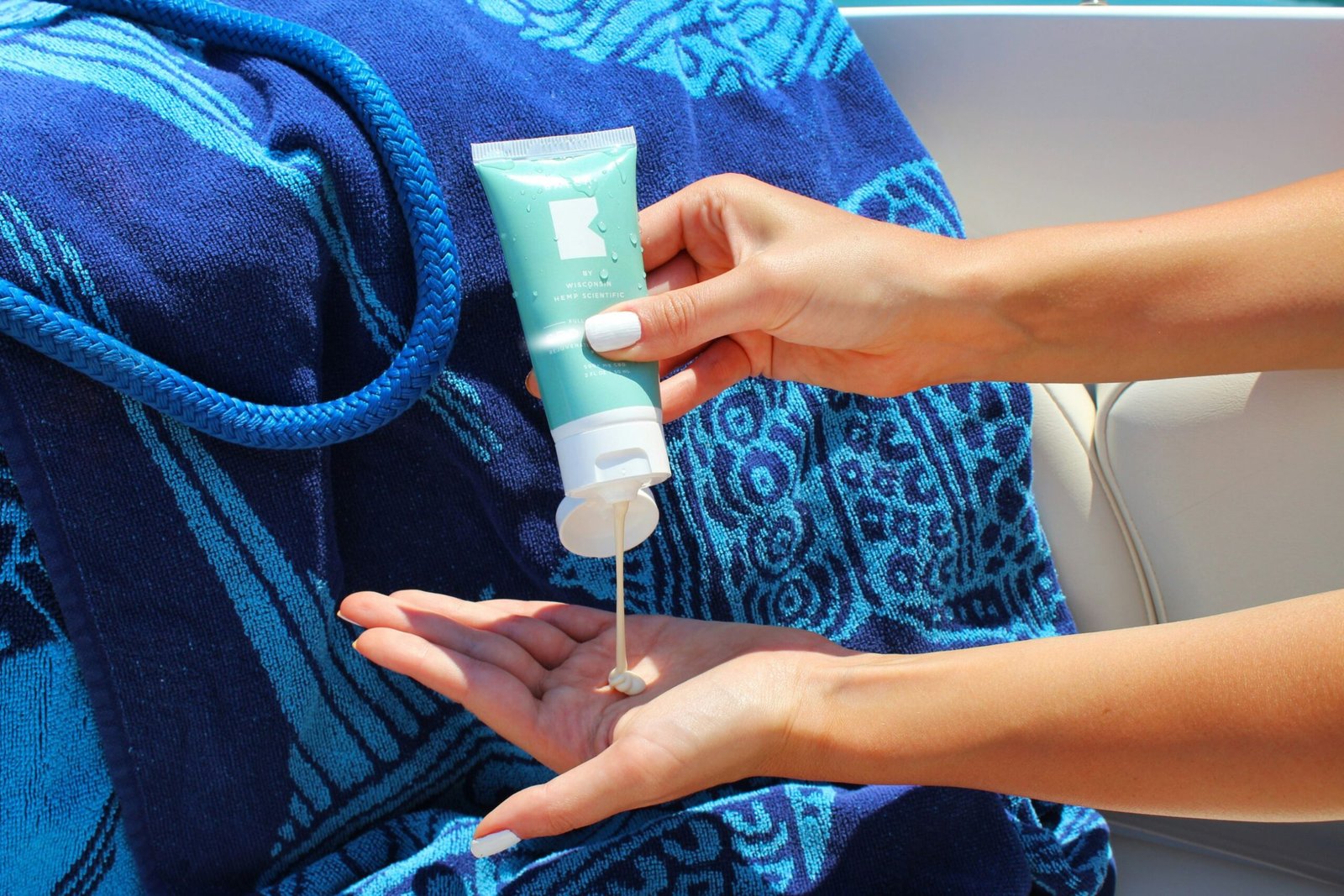
Since July is UV Safety Month, let’s use sunscreen as an example.
Many people know that sunscreen helps protect against skin damage and skin cancer, yet many still don’t wear it consistently.
The Health Belief Model helps explain why.
Perceived Susceptibility
Perceived susceptibility refers to how likely someone believes they are to experience a negative health outcome.
In this case, that outcome is skin cancer caused by UV exposure.
Someone may believe they aren’t at much risk because they don’t spend much time outside, have never had a sunburn, or think skin cancer only affects people who live in tropical climates.
If someone doesn’t believe they’re personally at risk, they’re less likely to see sunscreen as necessary.
Perceived Severity
Perceived severity refers to how serious someone believes the health outcome would be.
A person who believes skin cancer is rare, easily treated, or “not a big deal” may feel little urgency to protect themselves from UV exposure.
On the other hand, someone who understands the potential health consequences is more likely to see prevention as worthwhile.
Perceived Benefits
Perceived benefits refer to whether someone believes the preventive behavior will actually help.
Some people may question whether sunscreen is effective or worry that the ingredients are harmful.
If they don’t believe sunscreen provides meaningful protection, they’re less likely to use it consistently.
Perceived Barriers
Perceived barriers are the obstacles someone believes stand in the way of taking action.
For sunscreen, these barriers might include forgetting to apply it, disliking how it feels on their skin, not keeping it readily available, not wanting to spend money on it, or believing it takes too much time to apply.
Even relatively small barriers can prevent healthy behaviors when they outweigh the perceived benefits.
Self-Efficacy
Self-efficacy is a person’s confidence in their ability to successfully perform a behavior.
People are much more likely to adopt healthy habits when they believe they can realistically fit them into their daily routine.
Sometimes increasing self-efficacy is as simple as helping someone develop a practical plan.
For example, keeping sunscreen next to a toothbrush can make it part of an existing morning routine, making the behavior easier to remember and repeat.
Cues to Action
Even when people believe they’re at risk and understand the benefits, they may still need reminders to act.
These reminders are known as cues to action.
For sunscreen, cues might include:
- Keeping sunscreen next to your toothbrush or car keys.
- Setting a daily reminder on your phone.
- Seeing UV index notifications in a weather app.
Small prompts can make a significant difference in turning good intentions into consistent habits.
Why Perception Matters
One of the most important lessons from the Health Belief Model is that behavior isn’t driven solely by facts.
A healthcare provider may know that sunscreen reduces the risk of skin cancer. A public health campaign may share that information widely.
But if an individual doesn’t believe they’re personally at risk, doesn’t think skin cancer is serious, doubts sunscreen works, or sees too many obstacles to using it, simply providing more information may not change their behavior.
Effective public health programs begin by understanding how people perceive a health issue before developing strategies to address those beliefs.
How Public Health Programs Use This Model
The Health Belief Model helps public health professionals identify which perceptions may be preventing healthy behaviors and design interventions that address those specific challenges.
For example:
- If people underestimate their risk, programs may focus on increasing awareness of personal susceptibility.
- If the seriousness of a condition is minimized, education may emphasize the potential consequences.
- If barriers are preventing action, interventions may focus on making healthy behaviors easier and more convenient.
- If people lack confidence, programs can provide practical tools and step-by-step support to build self-efficacy.
- If people simply forget, reminders and environmental cues can encourage consistent action.
Rather than assuming people need more information, the model encourages us to understand why they aren’t taking action in the first place.
What This Means for Our Work at CHIRP
The Health Belief Model reminds us that successful public health programs are about understanding people, not just about communicating evidence.
Individuals make decisions based on how they perceive risk, benefits, barriers, and their own ability to change. Those perceptions can vary widely from person to person, even when the facts are the same.
At CHIRP, understanding these perceptions helps us design, implement, and evaluate programs that meet communities where they are. By addressing the beliefs that influence behavior, organizations can create interventions that are more likely to lead to meaningful and lasting change.